
Motorcycle Security Starts With the Building, Not the Chain

Ask most riders how they protect their bike and you’ll get a list of things you can buy. A chain and a ground anchor, a disc lock, an alarm, a tracker, a cover so it isn’t advertising itself. It’s a good list and I’m not going to argue with any of it.
I come at this from a different direction, because I don’t sell security products. I assess buildings. I’ve run a storage facility for more than twenty years and I live on site, so a good chunk of my working life has been spent walking spaces and working out what they do and don’t stop: where a vehicle can get to, what’s visible from the road, what you can fix something to, who can reach a door and when.
That’s a useful lens to point at your own garage, and almost nobody does it. So rather than tell you what to buy, I want to show you how I’d look at wherever your bike is sitting tonight.
Why The Space Matters More Than People Think
There’s a reason I’d start with the building rather than the chain.
Most security advice assumes a thief turns up, meets your lock, and has to defeat it standing where the bike is standing. Frequently that isn’t what happens. A significant share of motorcycle thefts involve lifting the bike and removing it intact, to be dealt with later somewhere private and unhurried. Two people can have a bike in a van in under a minute, and a steering lock or an alarm doesn’t prevent it. Any lock holding the bike to itself rather than to something fixed simply leaves with the bike.
What comes back afterwards isn’t encouraging either. Recovery for stolen motorcycles runs at roughly 48 per cent in Australia, quite a bit lower than the recovery of stolen cars.
If the bike can be picked up and carried out, then the things standing between you and that happening are almost all features of the space. Whether it can be anchored. Whether a vehicle can get near it. Whether anyone would see. That’s why I look at buildings first.
How To Check Your Garage For Motorbike Security
Go and stand in it. This takes about ten minutes and you only need to do it once.
1. Start outside, on the footpath. What can you see when the door is shut? Now have someone open it and look again. A lot of riders have never seen their own garage from the street with the door up, and it’s the single most informative thing you’ll do. Whatever is visible from there is what somebody gets to assess at leisure, on their own schedule, without ever coming near the bike.
2. Walk the approach. How close can a vehicle get to the door, and how easily? A van that can reverse to within a couple of metres on a quiet street is a very different proposition to one that has to stop on a main road and cross a driveway in view of three houses. Look for the step, the corner, the narrow gate, the bollard. Obstacles that annoy you when you’re wheeling the bike out are doing work for you the rest of the time.
3. Look down. What can you actually anchor to? A ground anchor into a concrete slab is the one piece of hardware that properly answers lift-away theft, and whether you can install one is a question about the floor, not the bike. Bolting into a timber floor, a thin screed or the wall plate of a colourbond shed is not the same thing, and it’s worth knowing which you’ve got before you go shopping for the anchor.
4. Look at the door itself. How is it held shut, and what’s it made of? Plenty of people fit a serious chain inside and leave a roller door secured by the mechanism it came with.
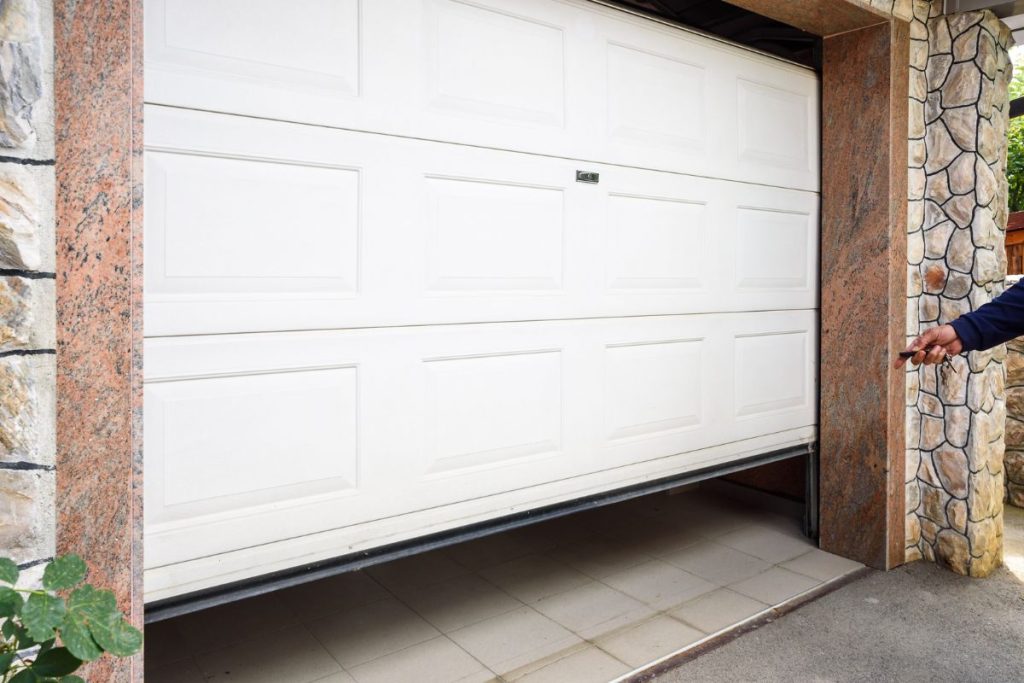
5. Then count the keys. Who has legitimate access to this space, and how many of them are there? Shared driveways, a landlord, a property manager, a housemate, the family. Not because any of those people are a risk, but because access you don’t control is access you can’t audit.
6. Finally, where does the bike sit? Nearest the door is convenient if it’s your daily commute, and it’s also the thing that goes first when the door is open for thirty seconds. If everything else in there means the bike has to live at the front, that’s a constraint worth knowing you have.
What That Walk Usually Turns Up
The gap is rarely an absence of security, it’s usually good security assembled one purchase at a time over several years with one part nobody has looked at since: the door left up while the car comes and goes, the chain through a wheel rather than the frame, the anchor bolted to something that would come away with it.
Doing this from the footpath is the only way to see the arrangement whole, the way somebody else would.
When Motorbike Storage Beats The Garage
Renting an external storage facility tends to get thought of as something limited to those moving house or moving interstate or abroad. In practice there are a few specific situations where motorbike owners start looking at it too. These are the three I hear most commonly from customers at my own storage facility in Melbourne, Australia.
The bike isn’t being ridden much. A machine that goes out twice a year is occupying prime space and getting handled constantly to reach other things. That’s when the convenience argument for home largely disappears, and the case for somewhere it can sit undisturbed gets stronger.
You’re going away. An extended trip, a deployment, a season overseas. An empty house with a bike in the garage is a different risk to an occupied one, and nobody’s checking on it.
The walk-around didn’t go well. Visible from the street, nothing to anchor to, a shared driveway, a door you can’t improve, or too many keys in circulation. Some of that you can fix. Some of it you can’t, particularly if you rent. If it’s not your daily ride, a secure storage facility for your motorbike may be an option worth considering.
How To Assess A Facility, Using The Same Walk
If you do go looking, the good news is that the walk-around works just as well on a storage site, and you should absolutely do it before you sign anything. Plenty of facilities won’t come out of it well, including some that seem fine online.
The same questions apply, with a few additions. Can a vehicle get right to the unit door, and is that a good thing or a bad thing here? Is the bike out of sight from any public road? Is entry controlled and recorded? Are you permitted to anchor into the floor, because many sites don’t allow it and that changes what your hardware can do. Is the unit undercover and dry, which matters for a bike sitting still. And is there anyone actually on the property outside office hours when theft is more likely, or is it cameras and a phone number?
That last one is worth pressing on. Recorded footage tells you what happened after the fact. It’s a different proposition to somebody being there.
What you’re looking for is a place that treats storing a bike as something it does properly, rather than an ordinary unit you happen to be putting a bike into. The difference shows up in the approach, the door widths and whether anyone can tell you what a bike needs if it’s going to be sitting still for six months.
One Thing To Check Whichever Way You Go
This isn’t my field, so I’ll keep it short and tell you to go and read your own paperwork.
The question I get asked more than any other at the counter is whether moving a bike into storage affects the insurance. I’m not qualified to answer that for your policy, but I can tell you it’s a real question rather than a paranoid one, because motorcycle policies are commonly written around the address where the bike is kept. One Australian policy I’ve seen puts it plainly: the premium “is based on the address you have provided at which your bike is garaged or parked”, and asks the rider to notify them if they change “the regular overnight parking situation”.
Wording varies enormously between insurers and between countries, so mine is no guide to yours. But if you’re about to change where the bike sleeps, for a season or permanently, ring them first and get a straight answer before making any decisions.
In short
Buy the chain, by all means. Just don’t assume it’s the thing doing the work. Most of what stops a bike leaving is the space it sits in, and that’s worth ten minutes of your attention:
• Look at the space from the footpath, with the door up, the way somebody else would
• Check what you can actually anchor to before you buy the anchor
• Count who has access, not just how many locks you own
• If the space can’t be fixed, and it isn’t your daily ride, moving it somewhere better is definitely worth some consideration
Rick Mooibroek owns and runs Aussie Safe Storage, a family owned self storage facility in Pakenham, Victoria. He has spent more than twenty years in the industry, storing countless cars and motorbikes securely.